This article is brought to you by: EV, leaders in visual analytics in pipeline integrity.

Phase I is expected to reach 1.5 Bcf/d of capacity by September 1 as Energy Transfer advances the Nederland export expansion, Desert Southwest Pipeline and Springerville Lateral.
Published by Allstream Insiders.
Allstream Insiders Summary
Energy Transfer has placed the Hugh Brinson Pipeline into commercial service and expects the system to be capable of flowing its full 1.5 billion cubic feet per day (Bcf/d) Phase I capacity by September 1, 2026.
The August 4 project update also confirms that a 14-mile lateral in Abilene, Texas, is ready for service, while the company continues development of the Desert Southwest Pipeline expansion following Federal Energy Regulatory Commission scoping meetings along the proposed route.
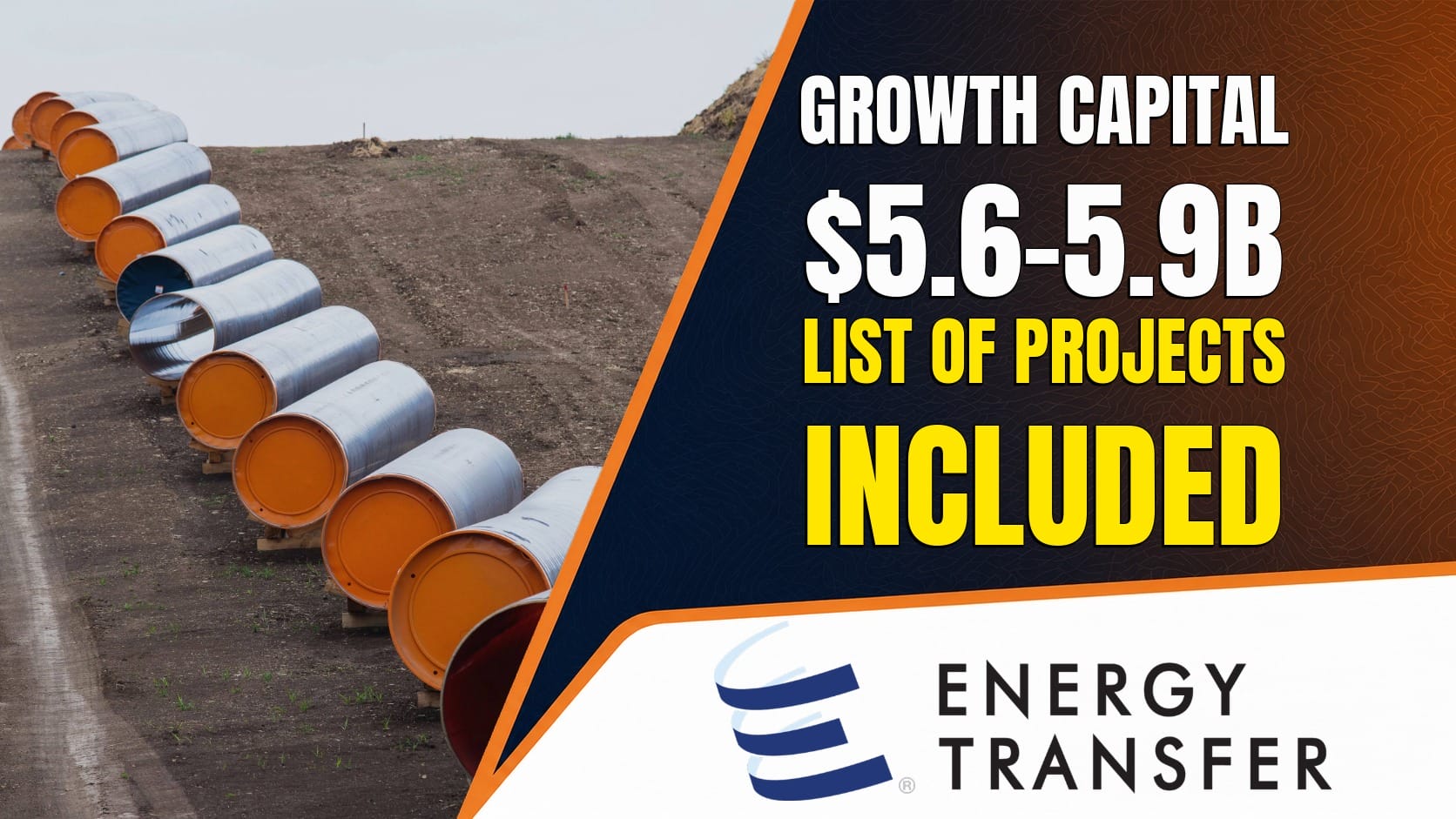
Energy Transfer expects to invest $5.6 billion to $5.9 billion in growth capital during 2026. The company recorded $1.10 billion of growth capital expenditures and $307 million of maintenance capital expenditures during the second quarter. These figures represent companywide capital programs and should not be assigned to one project.
The current project portfolio includes several additional infrastructure milestones:
- A fully subscribed expansion of the Nederland NGL Export Terminal designed to add 240,000 barrels per day of ethane export capacity and 55,000 barrels per day of LPG export capacity.
- Completed Lone Star Express Pipeline upgrades providing more than 90,000 barrels per day of incremental Permian NGL takeaway capacity.
- Commercial startup of the 275 MMcf/d Mustang Draw I gas processing plant in the Midland Basin.
- Continued development of the Springerville Lateral, a Transwestern Pipeline project designed to support natural gas generation replacing two coal-fired plants.
- Startup of the third and fourth units in an eight-facility program of 10-megawatt natural gas-fired generation units supporting Energy Transfer operations in West Texas.
Energy Transfer Project and Capital Tracker
Energy Transfer’s second-quarter update covers projects ranging from newly commissioned assets to long-dated pipeline and terminal expansions.
| Project or program | Location and principal scope | Capacity or capital value | Reported stage or schedule |
|---|---|---|---|
| Hugh Brinson Pipeline Phase I | Permian Basin to Energy Transfer’s network south of Dallas-Fort Worth | 1.5 Bcf/d | In commercial service; full Phase I capability expected September 1, 2026 |
| Abilene lateral | 14-mile lateral from Hugh Brinson in Abilene, Texas | 14 miles | Construction complete and ready for service |
| Desert Southwest Pipeline | Approximately 520-mile, 48-inch Transwestern expansion from the Permian Basin toward Arizona | Up to 2.3 Bcf/d; up to $5.6B excluding AFUDC | FERC scoping meetings completed; service targeted for Q4 2029 |
| Springerville Lateral | Approximately 120-mile, 30-inch lateral from Transwestern to new gas-fired generation | 625 MMcf/d; approximately $600M | Backed by 20-year agreements; service targeted for Q4 2029 |
| Nederland NGL Export Terminal expansion | Added refrigeration, Mont Belvieu-to-Nederland pipeline capacity and two new ship docks | +240,000 bpd ethane; +55,000 bpd LPG | Staged service beginning in 2028; docks expected in mid-2029 |
| Lone Star Express upgrades | Permian NGL takeaway expansion | More than 90,000 bpd | Completed in Q2 2026 |
| Mustang Draw I | New Midland Basin natural gas processing plant | 275 MMcf/d | Entered service in June 2026 |
| West Texas generation program | Eight gas-fired units supporting Energy Transfer operations | 8 units at 10 MW each | Four units in service following June and July startups |
Hugh Brinson Phase I Enters Commercial Service
The Hugh Brinson Pipeline is now in commercial service, moving the project from construction and commissioning into operations. Energy Transfer expects the pipeline to be capable of flowing its full 1.5 Bcf/d Phase I capacity by September 1, 2026.
The large-diameter intrastate pipeline was designed to connect Permian Basin gas supply near Waha with Energy Transfer’s existing pipeline and storage network south of the Dallas-Fort Worth area. From that network, shippers can access multiple Texas market centers and downstream connections serving industrial, power and Gulf Coast demand.
Energy Transfer originally described Phase I as approximately 400 miles of pipeline with a related Midland Lateral connecting company-owned and third-party processing plants in Martin and Midland counties. The August 2026 update establishes the commercial-service milestone and full-capacity target but does not change the previously described Phase I route.
Energy Transfer also completed another 14-mile lateral in Abilene, Texas, during the second quarter. The lateral is ready for service and extends the number of delivery paths tied to the Hugh Brinson system.
Desert Southwest Advances Through FERC Review
The Desert Southwest Pipeline expansion remains in development after FERC completed scoping meetings in communities along the proposed route. The regulatory milestone follows the start of the project’s FERC pre-filing process in March 2026.
The Transwestern Pipeline project is planned as an approximately 520-mile, 48-inch natural gas pipeline extending from the Permian Basin toward the Phoenix area. Energy Transfer has described the project as capable of transporting up to 2.3 Bcf/d, depending on the final compression configuration.
Energy Transfer estimates the project could cost up to approximately $5.6 billion, excluding allowance for funds used during construction, and continues to target service in the fourth quarter of 2029.
The proposed corridor is intended to serve utilities and energy providers across New Mexico and Arizona, where population growth, high-technology development and data-center expansion are increasing interest in additional natural gas transportation capacity. The project remains subject to the federal review and authorization process.
Springerville Lateral Supports Coal-to-Gas Conversion
Energy Transfer is also advancing the Springerville Lateral, an approximately 120-mile, 30-inch pipeline extending south from the existing Transwestern system to new natural gas-fired generation expected to replace two coal-fired plants.
The lateral is designed for approximately 625 MMcf/d of capacity, carries an expected project cost of approximately $600 million and is supported by 20-year agreements. Energy Transfer is targeting service in the fourth quarter of 2029.
Springerville and Desert Southwest are separate projects on the Transwestern system. Desert Southwest is the larger regional expansion connecting Permian supply with Southwest markets, while Springerville is a dedicated lateral serving the generation-conversion scope.
Energy Transfer separately reported that two customers added a combined 100 MMcf/d to existing natural gas-service contracts for power-plant or data-center sites in Texas. The added commitments represent contracted service demand, not the design capacity of either Transwestern project.
Nederland Expansion Adds Refrigeration, Pipeline and Dock Scope
The fully subscribed Nederland NGL Export Terminal expansion is designed to add 240,000 barrels per day of ethane export capacity and 55,000 barrels per day of LPG export capacity.
Energy Transfer’s announced scope includes three connected infrastructure packages:
- Additional terminal refrigeration capacity.
- Expanded capacity on the NGL export pipeline from Mont Belvieu to Nederland.
- Construction of two additional NGL ship docks.
The expansion is expected to enter service in stages beginning in 2028. Energy Transfer expects the additional docks to be completed in mid-2029, after which refrigerated NGL export capacity at Nederland is expected to exceed 1.25 million barrels per day.
The project is fully subscribed, and the added ethane capacity is supported by long-term commitments extending into the 2040s. Separate expansions of refrigerated propane and butane storage at Nederland are expected to be available in the first half of 2027, ahead of the larger export-capacity program.
Lone Star Express and Mustang Draw I Reach Operating Milestones
Energy Transfer completed upgrades to the Lone Star Express Pipeline during the second quarter, providing more than 90,000 barrels per day of incremental NGL takeaway capacity from the Permian Basin.
The company also placed the Mustang Draw I processing plant into service in the Midland Basin in June 2026. The plant is designed to process 275 million cubic feet per day of natural gas.
Together, the two milestones add processing and takeaway capability at different points in Energy Transfer’s Permian-to-Mont Belvieu system. Mustang Draw I processes natural gas in the Midland Basin, while the Lone Star Express work expands the downstream movement of NGLs from the Permian.
Energy Transfer further reported new long-term transportation and fractionation agreements covering approximately 300,000 barrels per day of capacity on its y-grade assets, with terms extending into the 2030s. The agreements provide a commercial signal for the company’s NGL transportation and fractionation system, but the capacity should not be added to the Lone Star Express expansion figure because the disclosures describe different infrastructure and contracting measures.
Four West Texas Generation Units Are Now in Service
Energy Transfer placed the third and fourth units in its West Texas generation program into service during June and July 2026. The company plans a total of eight natural gas-fired facilities rated at 10 megawatts each.
The units are intended to support Energy Transfer’s own operations in West Texas. With four facilities now operating, half of the planned program has reached service.
The generation program is distinct from Energy Transfer’s pipeline contracts serving third-party power plants and data centers. It represents on-system power infrastructure, while the contracts and Transwestern projects address natural gas transportation to customer sites.
Energy Transfer’s 2026 Capital Plan Reaches $5.6 Billion to $5.9 Billion
Energy Transfer now expects to invest $5.6 billion to $5.9 billion in growth capital during 2026. The company recorded $1.10 billion of growth capital expenditures during the second quarter.
Energy Transfer also recorded $307 million of maintenance capital expenditures for the quarter. Growth capital generally supports new or expanded assets, while maintenance capital supports the integrity and operating condition of the existing system.
The full-year range is a companywide capital plan. It includes spending across Energy Transfer’s broader infrastructure portfolio and should not be interpreted as the budget for Hugh Brinson, Nederland, Desert Southwest or any other single project. Where Energy Transfer has disclosed project-level values, such as up to $5.6 billion for Desert Southwest and approximately $600 million for Springerville, those estimates remain separate from the annual capital range.
Allstream Perspective
Energy Transfer’s August update shows a portfolio progressing across several project stages at the same time. Hugh Brinson, the Abilene lateral, Lone Star Express and Mustang Draw I have reached commercial service, readiness or completion milestones. Nederland has defined terminal, refrigeration, pipeline and marine construction scope, while Desert Southwest remains in federal review and Springerville carries a defined route concept, capacity, capital estimate and target date.
For the industrial supply chain, these projects could create demand across large-diameter line pipe, compression, gas processing, NGL refrigeration, storage, marine loading, electrical generation, automation, instrumentation, inspection and commissioning. These are scope-based work categories identified by Allstream; they are not contractor awards or confirmed bid packages.
The most immediate evidence to monitor is Hugh Brinson’s full Phase I capability, startup progress across the remaining West Texas generation units, detailed execution of the Nederland terminal and dock packages, and the federal certificate process for Desert Southwest. Springerville’s 20-year agreements and defined 2029 service target make it another project to track as engineering, permitting and construction planning advance.